Next-Gen Solar Sails & Translucent Greenhouses Are Powering Zero-Carbon Research
Wavelength-selective solar glass generates clean electricity while letting plants absorb the exact light they need to flourish.

Senior Science & Culture Writer · November 24, 2026
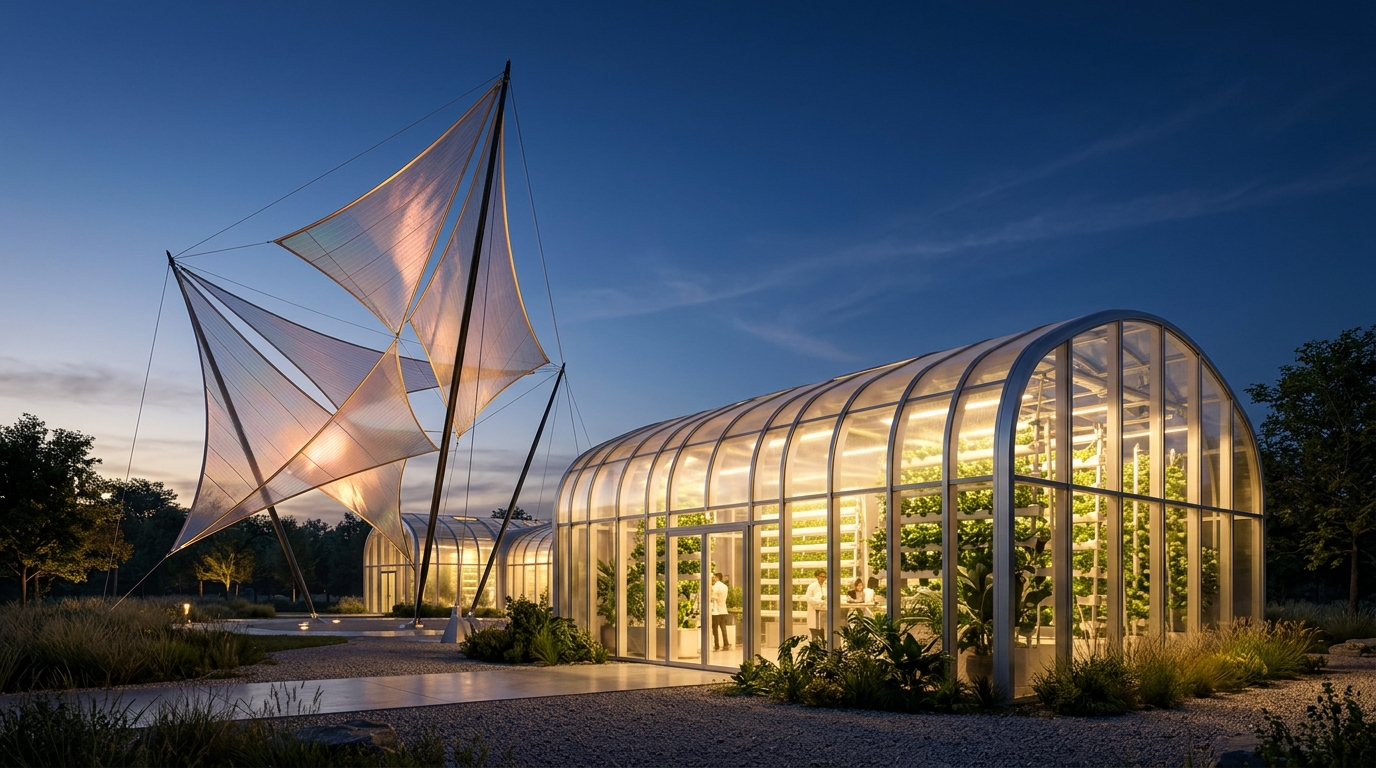
- Semi-transparent organic solar films convert UV and infrared rays into electricity while passing visible red/blue light for photosynthesis.
- Greenhouse crops under solar glazing required 48% less irrigation water.
- Simultaneously, space physicists tested ultra-thin reflective solar sails derived from the same polymer.
At dusk in the Sonoran Desert, an experimental greenhouse glows like an amber lantern beside a sweeping, iridescent solar sail prototype. Inside, rows of crisp basil and strawberries thrive under glass that is quietly powering its own climate pumps.
Traditional silicon solar panels cast heavy shadows, forcing farmers and engineers to compete for sunny acreage. By contrast, next-generation wavelength-selective films capture invisible ultraviolet and near-infrared photons to generate electricity, while letting photosynthetically active light pour straight onto the leaves below.
“We no longer have to choose between harvesting sunlight for food or harvesting it for clean energy—glass can now do both.”
Even better, blocking excess heat rays cut indoor evaporation nearly in half—meaning arid regions can grow high-yield produce with dramatically less freshwater.
Cross-disciplinary engineers working on deep-space propulsion noticed the ultra-light polymer's tensile strength and adapted a cousin of the material into foldable solar sails, proving that breakthroughs aimed at feeding Earth often propel humanity toward the stars too.
About the Writer
Rebekah BrandesTranslates peer-reviewed breakthroughs, linguistic curiosities, and ecological milestones into engaging morning reads.