Once-Endangered Green Sea Turtles Stage a Historic Comeback Across 12 Pacific Atolls
Decades of community beach patrols and dark-sky lighting ordinances are paying off in record hatchling counts.

Environment & Innovation Reporter · November 23, 2026
- Nesting green sea turtle populations have grown by 380% over three decades of protection.
- Amber turtle-safe coastal streetlights guide hatchlings toward moonlit ocean waves instead of roads.
- Local fishing cooperatives adopted circular hooks that cut accidental bycatch by over 85%.
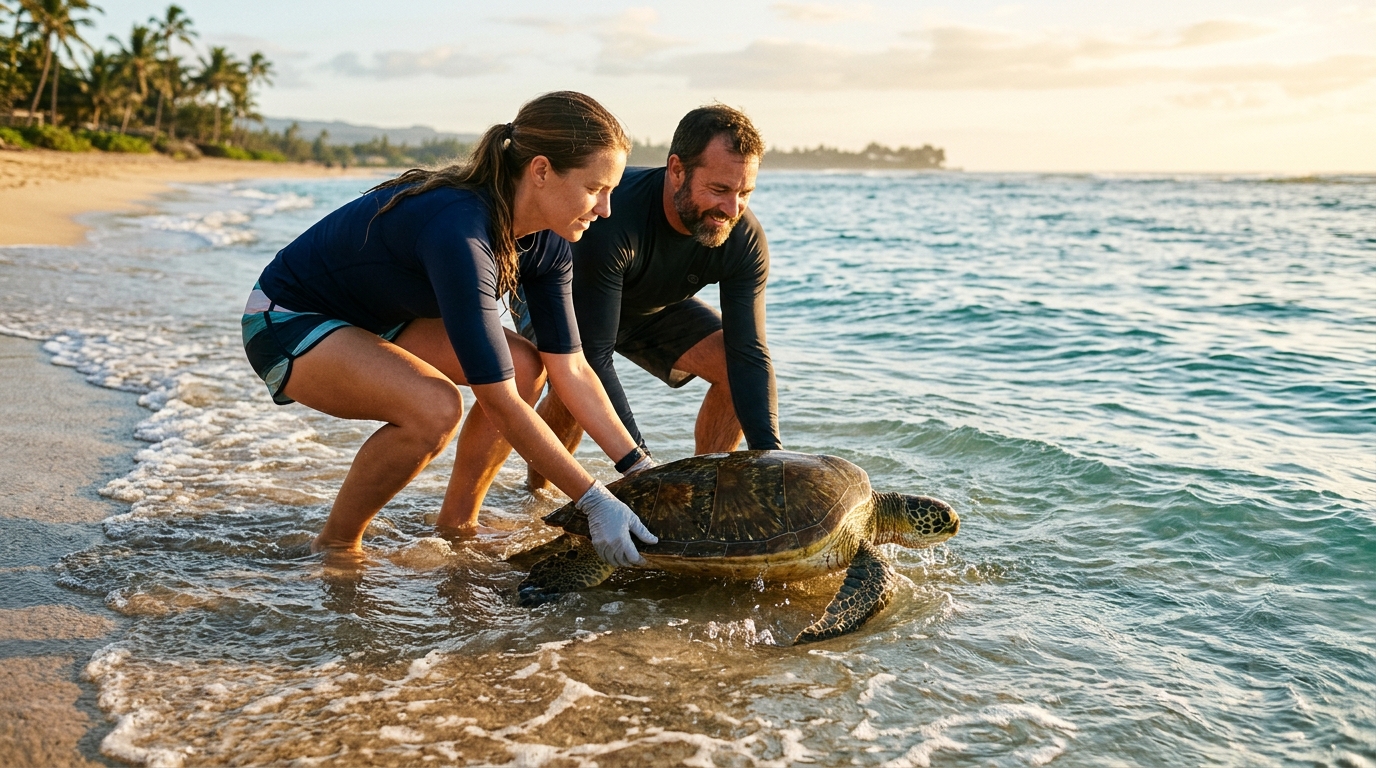
Just before sunrise along the calm turquoise shallows, two marine biologists gently lower a tagged green sea turtle back into the surf. Within three steady flipper strokes, she glides into the golden reef light.
Moments like this used to feel vanishingly rare. In the early 1990s, coastal development, plastic debris, and artificial beachfront floodlights pushed Pacific sea turtle nests to historic lows.
“Nature is astonishingly resilient when we simply give coastlines room to breathe.”
A coordinated 30-year alliance between coastal towns, Indigenous guardians, and marine researchers quietly turned the tide. Hotels swapped harsh white floodlights for low-glow amber fixtures; local fishers transitioned to circle hooks; and volunteer dawn patrols shielded thousands of nests.
This season's census confirms what conservationists dared to hope: sea turtle populations across 12 monitored atolls have rebounded nearly fourfold, prompting biologists to celebrate one of modern marine biology's brightest recovery stories.
About the Writer
Stephanie FriedmanReports on clean-energy engineering, ocean conservation, and wildlife comebacks across the globe.